Between 2009 and 2011, I was a researcher at the IDN lab of the EnsadLab, in Paris. For those two years, I worked on non-verbal interaction mechanics based on the emotions of their users.
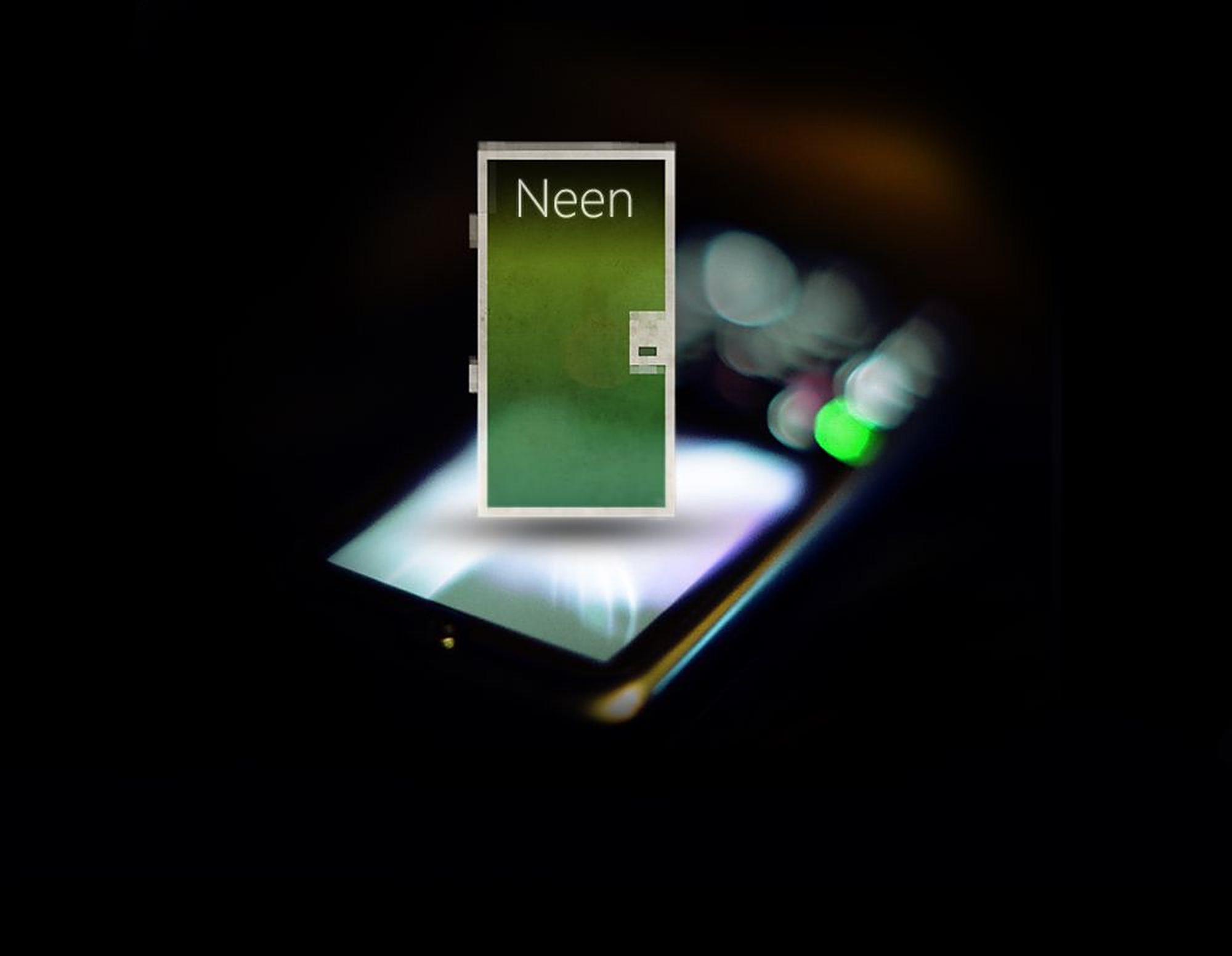
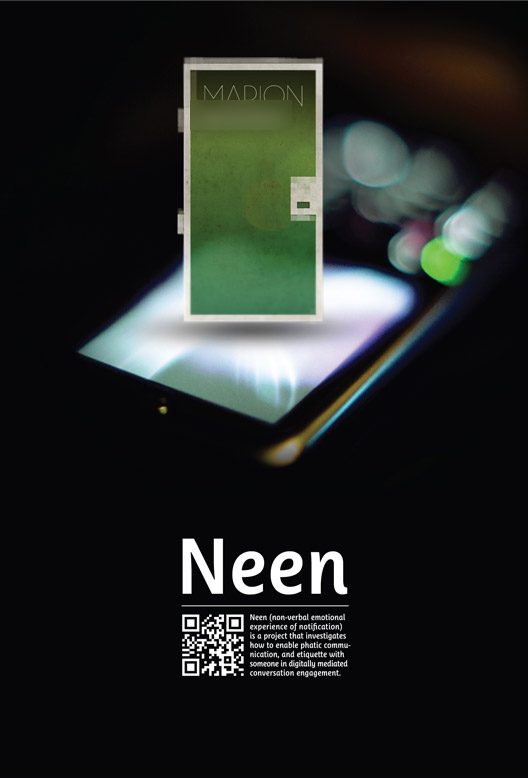
Neen was born from that work. The name comes from two phrases that share the same acronym, novel and non-verbal emotional experience of notification. I wanted to give our messages back some of the politeness we put into knocking on someone’s door, with the presence and emotion that gesture carries.
The short film I made in 2011 to present my intentions and prototypes.
2010 · my question
Knock before entering
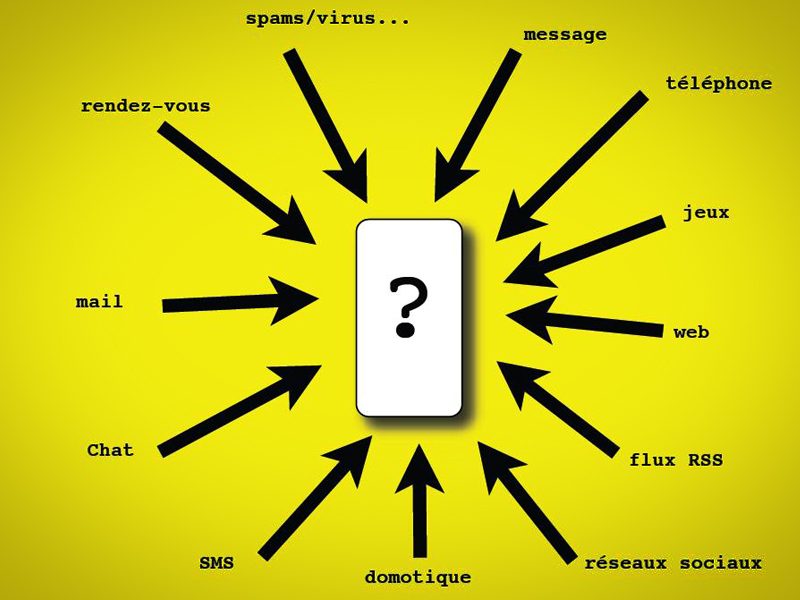
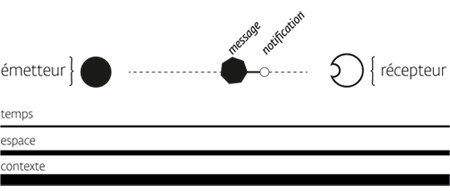
My 2010 research note starts from a tiny moment, the one just before a message arrives. I describe it as the meeting of a place and a moment between two people. The one who writes doesn’t know where the other is or what they are going through. Yet the phone rings the same way everywhere, at the office as in the middle of the night.
So I look at the gestures we already know how to make, like knocking on a door or slipping a note under it. Edward T. Hall gives me proxemics, the distances everyone keeps around themselves. Roman Jakobson gives me the phatic function, those words whose only job is to say we are here.
2009-2011 · EnsadLab
A lab to learn design research
In June 2009 I finish at the Ensad with my diploma project Hacking citoyen. In the autumn I join the EnsadLab in the IDN programme, for mobile digital identities. Rémy Bourganel founded it and co-directs it with Étienne Mineur. Jean-François Depelsenaire follows Neen with them. We are about six young researchers around the table.
In the first year I mostly learn how to do research. The sociologist Stéphane Hugon introduces us to the sociology of the imaginary. The anthropologist Stefana Broadbent teaches us to observe people and to keep logbooks. These two voices from the human sciences change the way I work for good.
There are also the encounters. Manuel Lima comes to talk to us about visualisation and Carole Collet about communicating textiles. Nicolas Nova teaches me the subtlety of field observation and takes me to Lift, in Geneva. Daniel Kaplan, from the Fing, invites me to Lift France, in Marseille. Along the way I meet Dale Herigstad, Dominique Cardon, Stéphane Vial and Giuseppe Attoma, who each shift my designer’s eye in their own way.
“Non-verbal design makes users more sensitive to the emotions they go through. All my work rests on interfaces able to gather them.”
Geoffrey Dorne2009-2011 · prototypes
Probes to touch
For two years I make probes, small objects you put in people’s hands to see what they do with them.
Probe 01 · 2009-2010
Fire and water
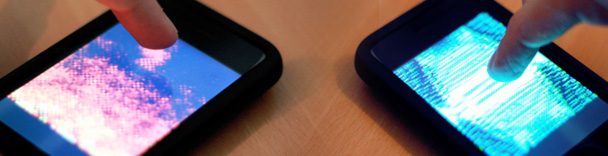
Move in the fire and drops fall on the other person’s water. Stir the water and the fire trembles, before everything calms down again.
Probe 02 · 2011
Knock Knock
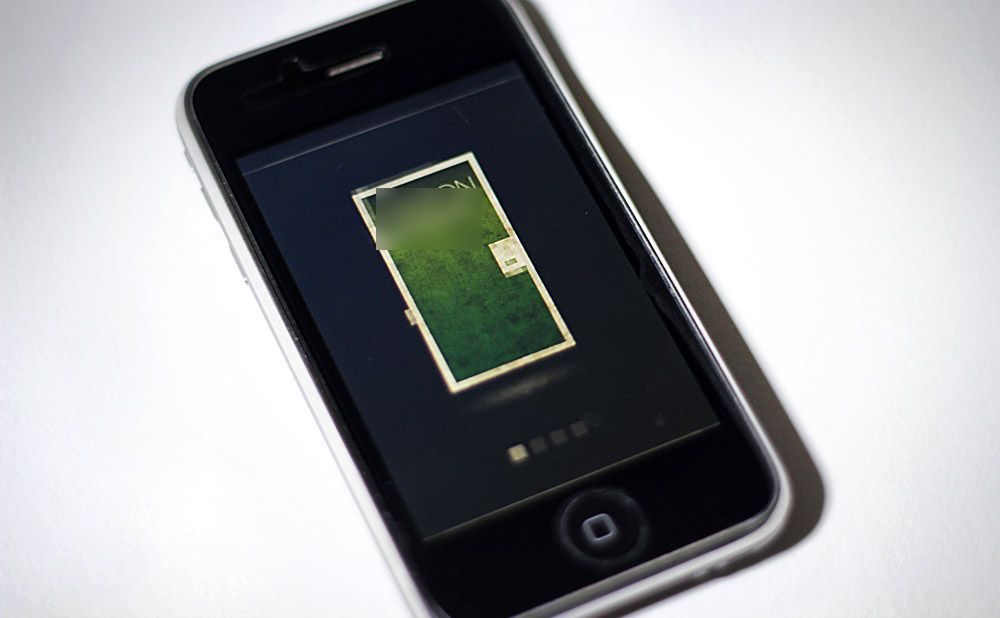
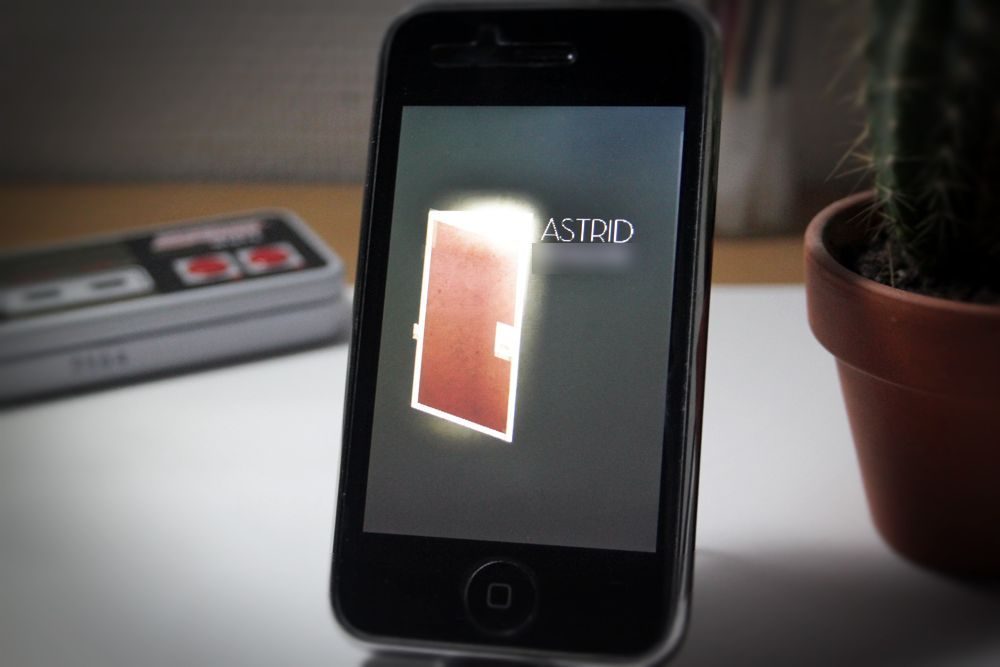
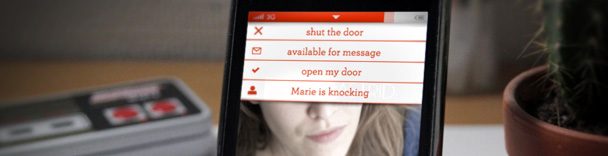
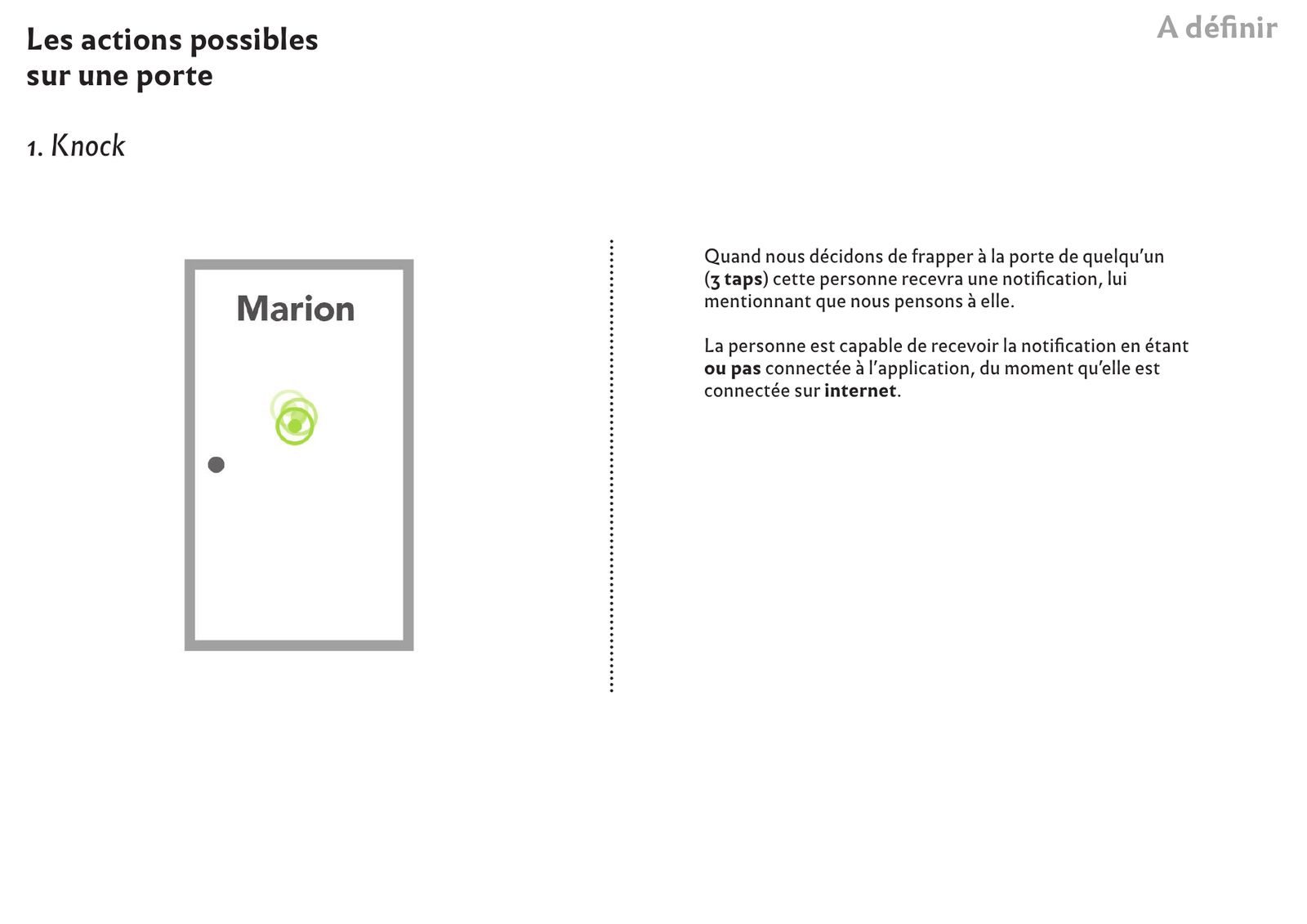
Swipe to change doors, then knock. Each knock says a little more.
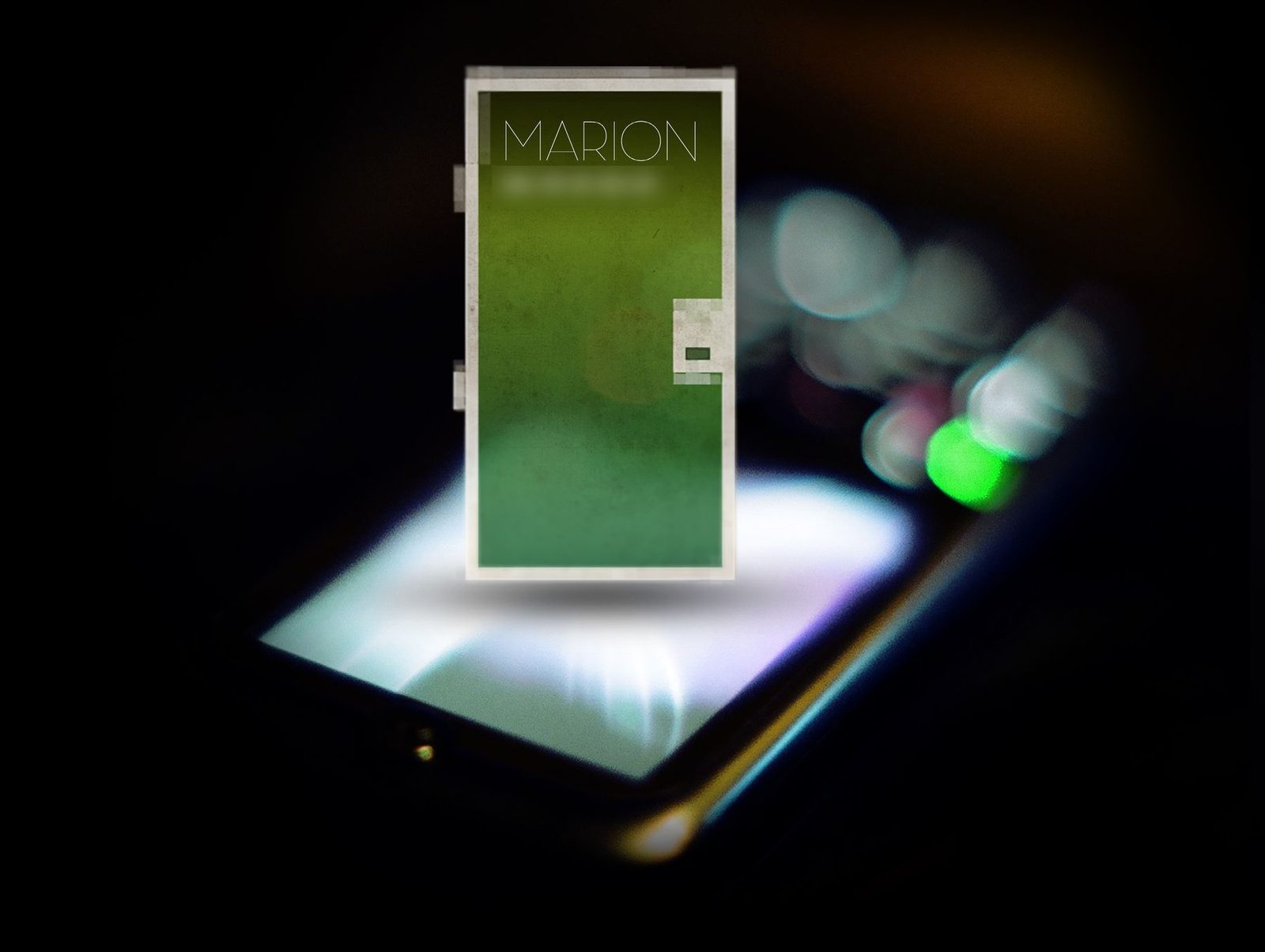
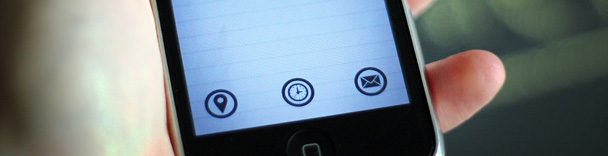
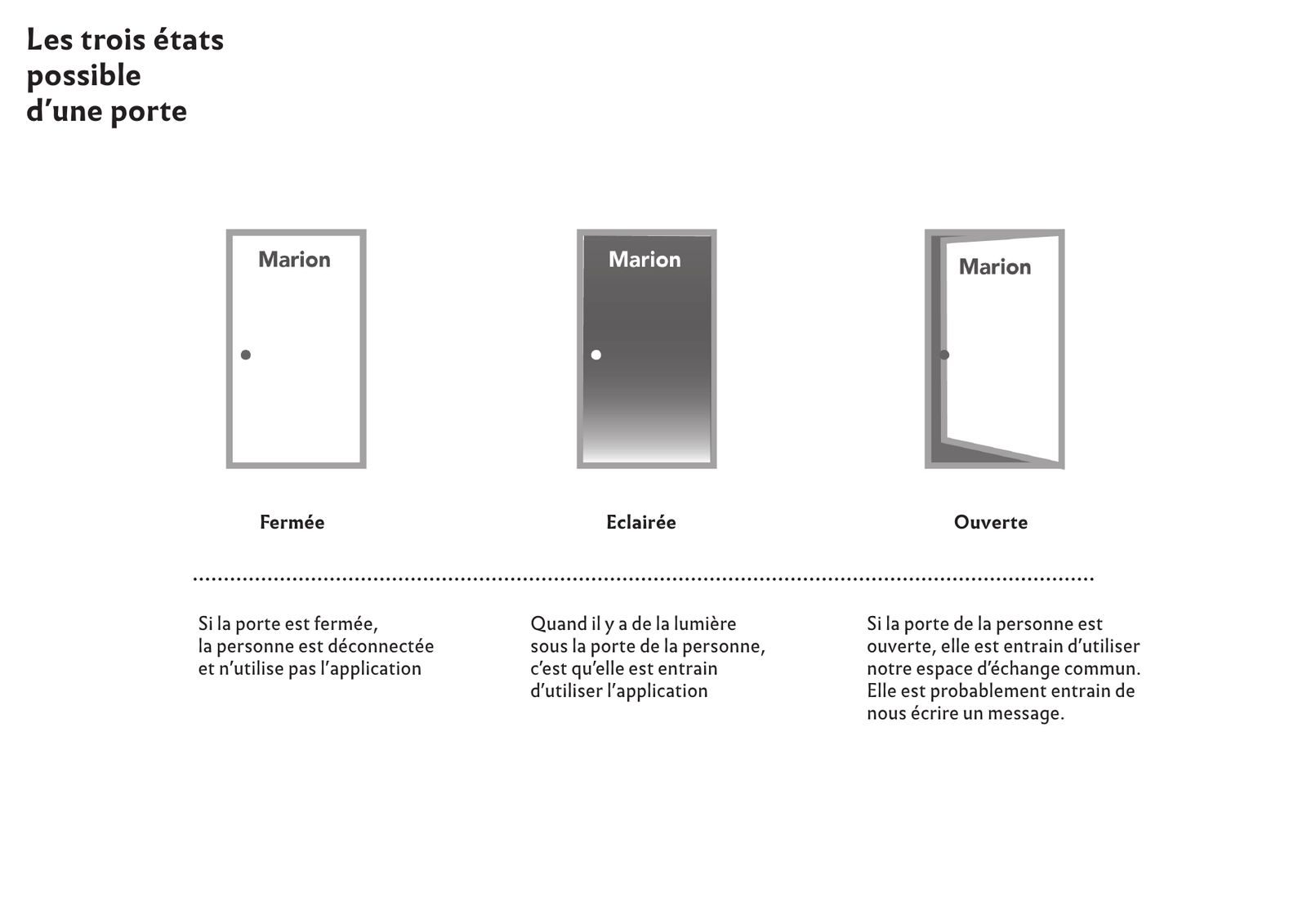
A door ajar means someone is writing to you, a light under the door that someone is in the app.
Probe 03 · 2011
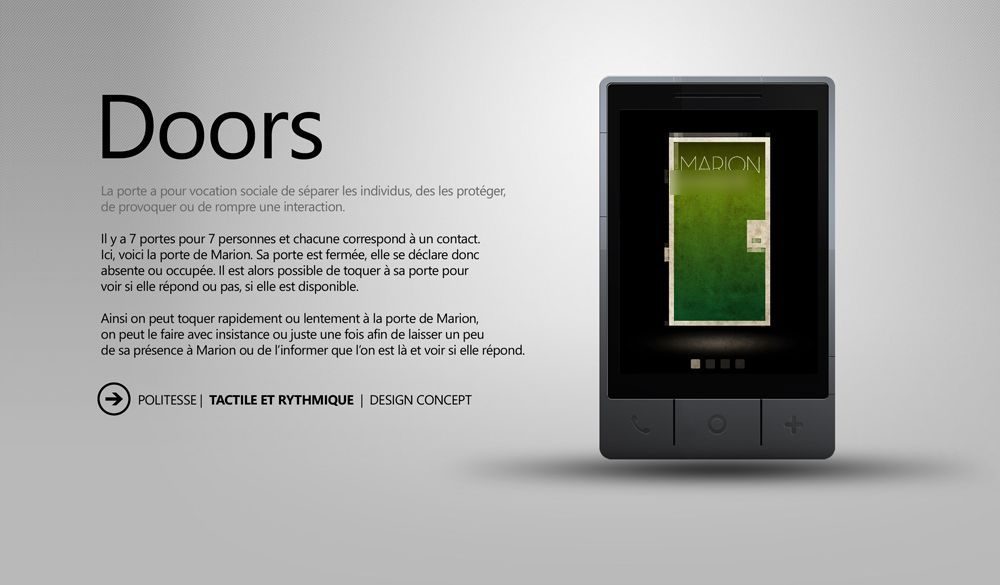
Doors
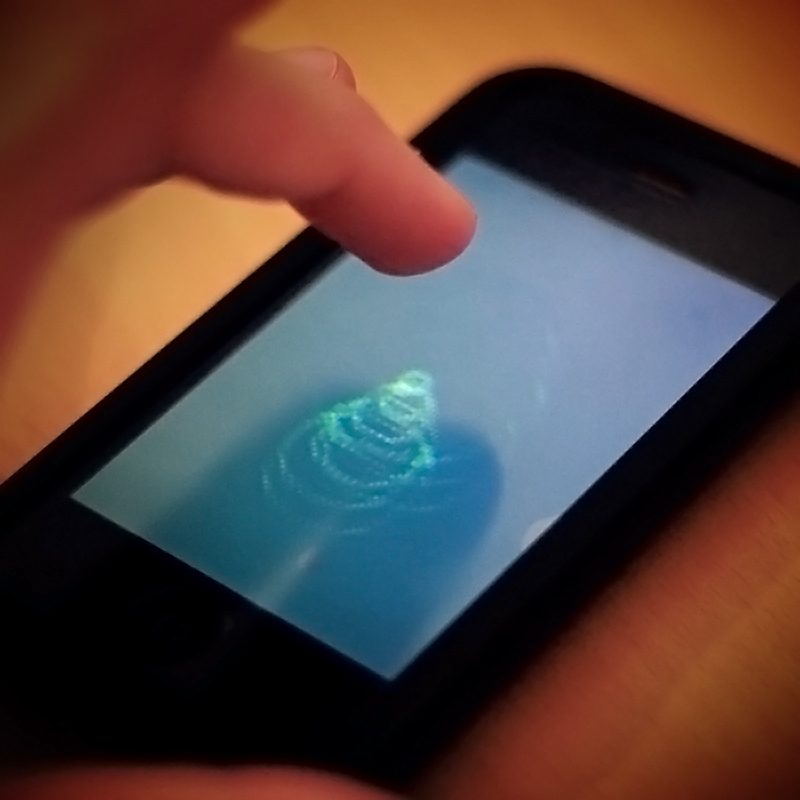
Knock on the screen. A face appears behind the icons.
Probe 04 · 2011
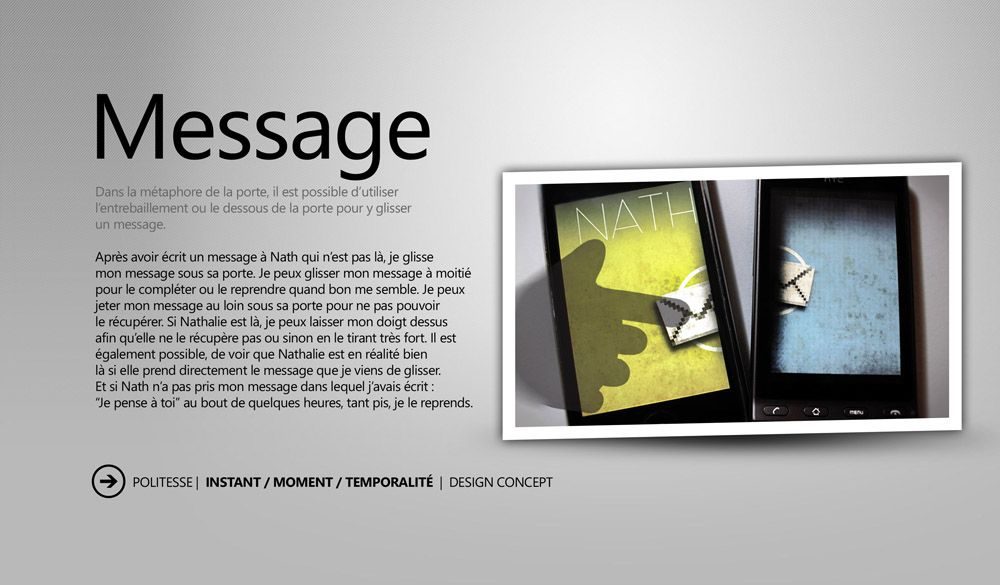
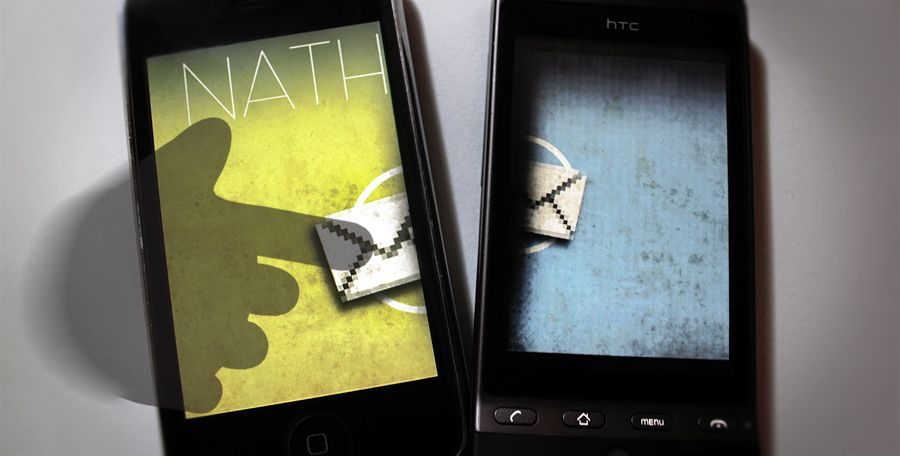
Letters
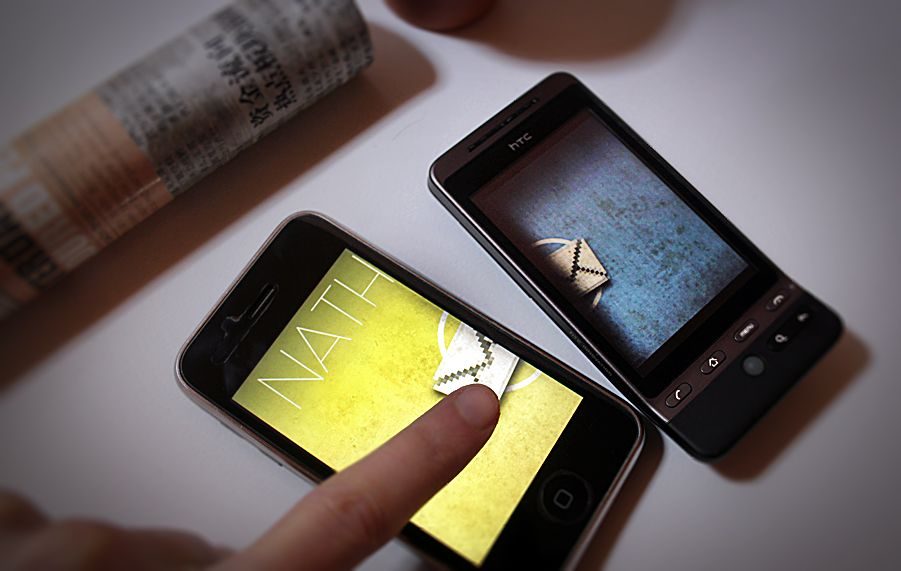
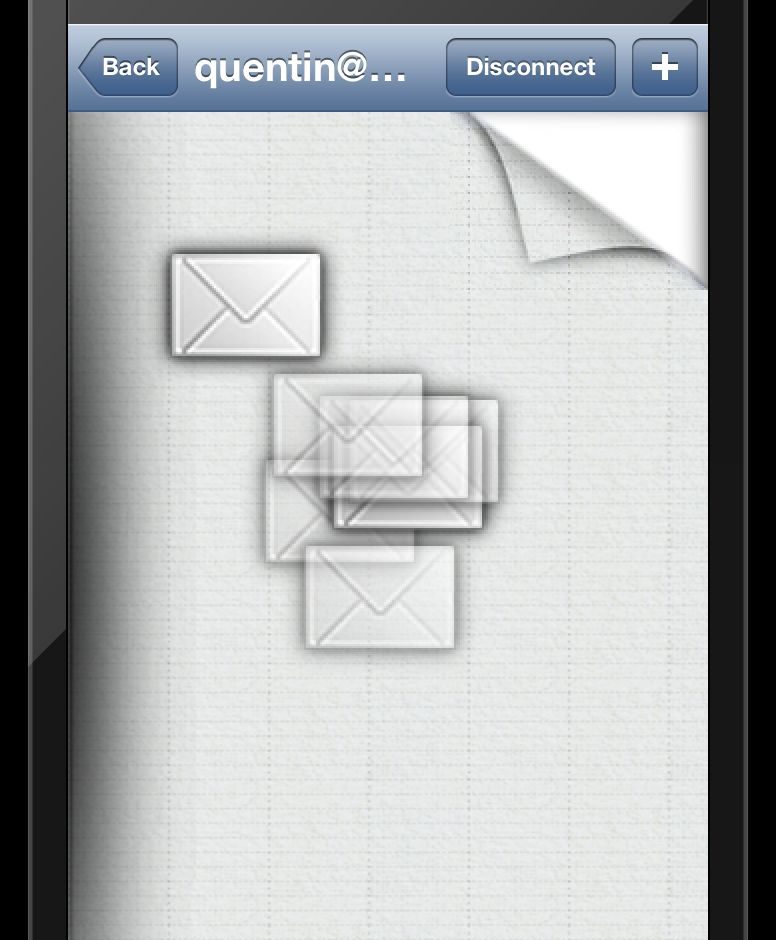
Slide an envelope to the left edge of the right-hand screen. It passes into the other phone, as if under a door.
2010-2011 · fieldwork
Listen before drawing
Stefana Broadbent teaches me to look at what people do with their phones, beyond what they say about them. She observes that our intimate exchanges gather around a handful of close people, always the same ones. I draw a decision from it for Neen, to work on communication from one person to another.
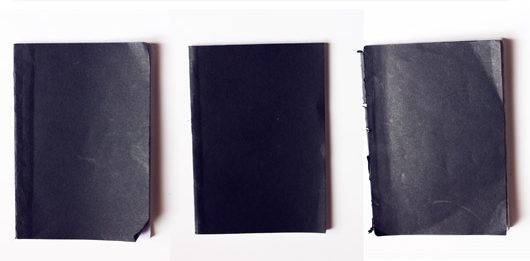
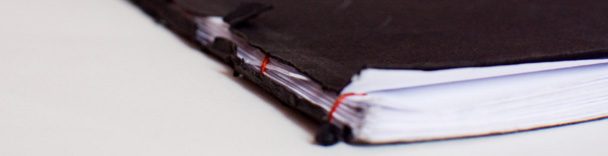
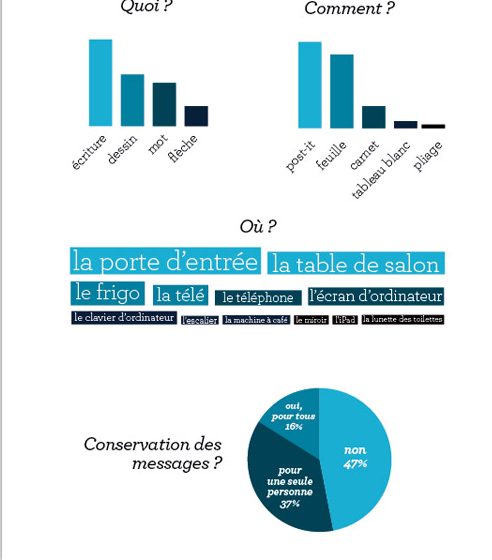
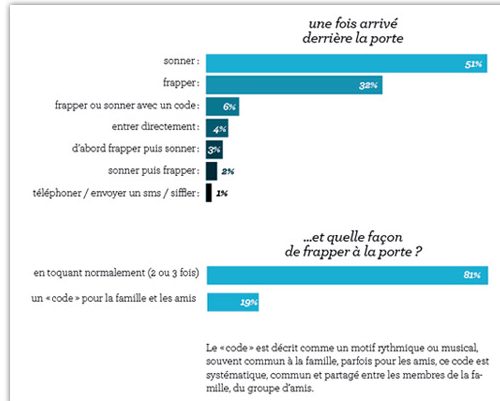
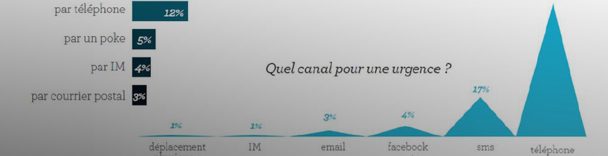
With her, I hand out six logbooks to be filled in over a month. People write down where they were when a message arrived and what they felt, desires and frustrations included. In spring 2011 I add an online questionnaire of fifteen questions on presence and absence between close people.
2011-2016
Showing it, then carrying on
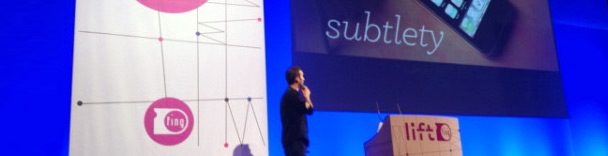
At Lift, in Geneva, I present Neen alongside David Serrault’s Hic & Nunc.
EnsadLab open days. Benoît Drouillat picks Neen to represent the Ensad in the designers interactifs exhibition.
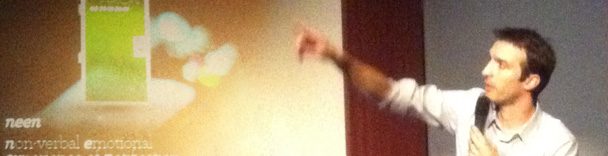
Closing conference in the Rodin lecture hall, during Futur en Seine. I present “Presence, non-verbal communication and shared spaces” with Stefana Broadbent. I graduate from the lab.
Six minutes of “disruptive pitch” at Lift France, in Marseille, then a slot on Place de la Toile, Xavier de La Porte’s show on France Culture.
I present Neen at TEDx Paris Universités.
With developer Quentin Mathé, a native iPhone app. We encrypt the content of messages on the server, so that nobody else can read them.
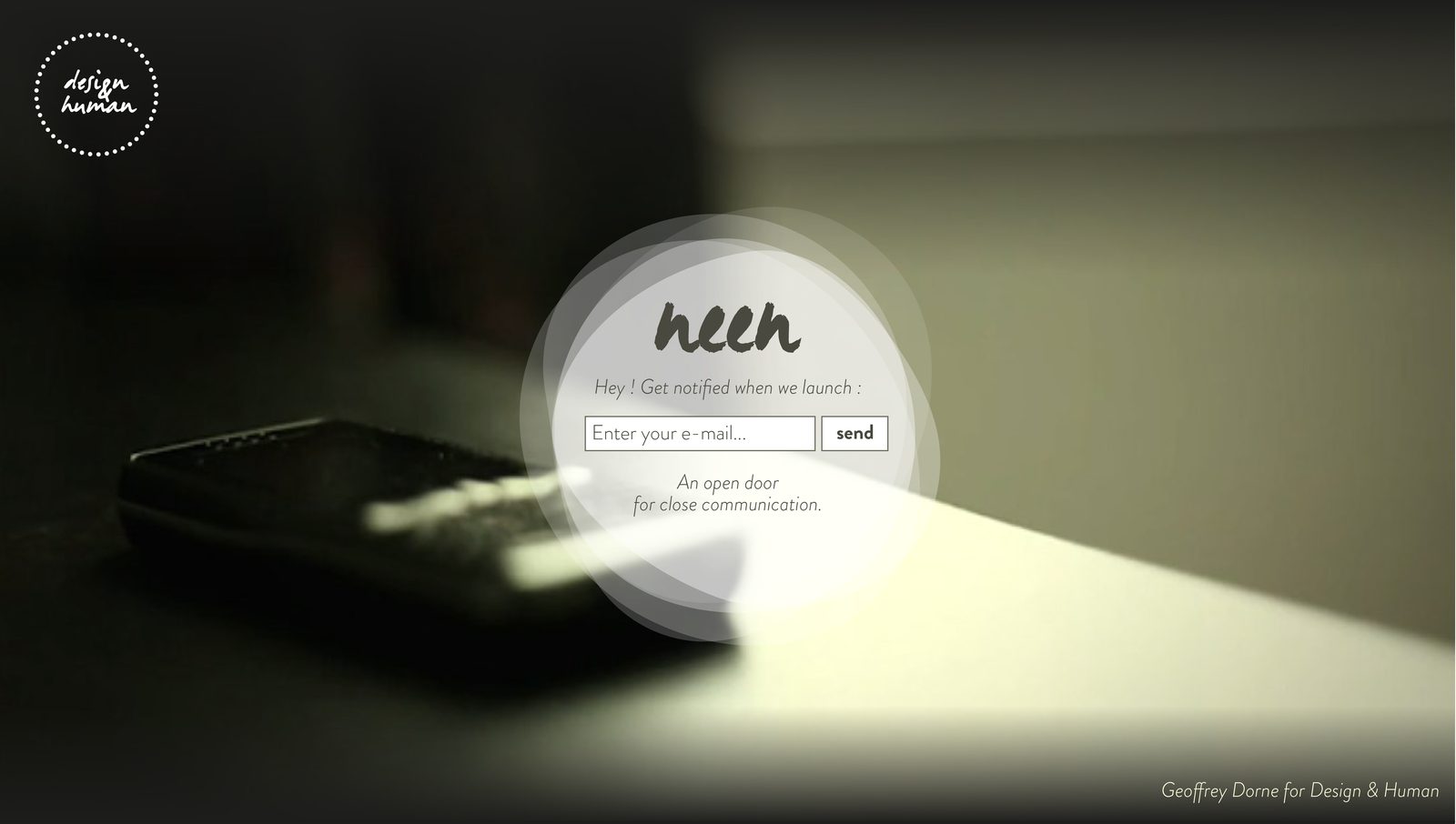
A first neen.fr page with web designer Matthieu Bué, under the banner of my studio Design & Human.
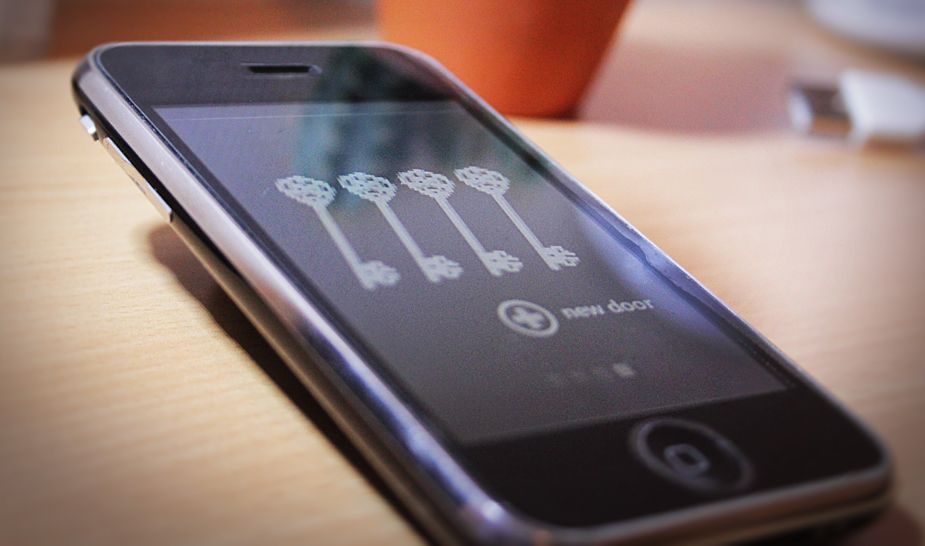
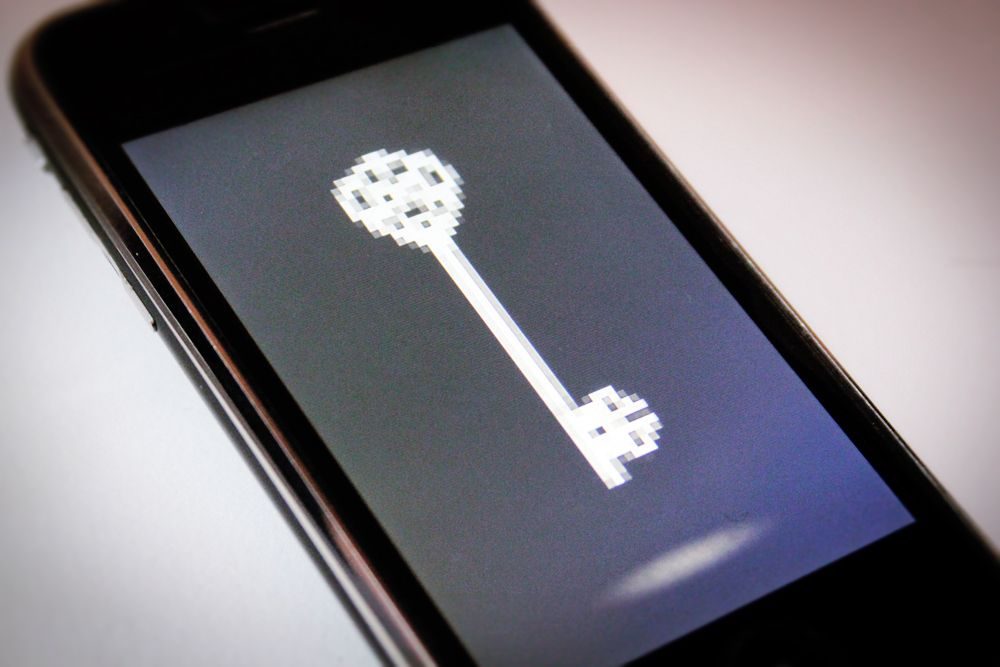
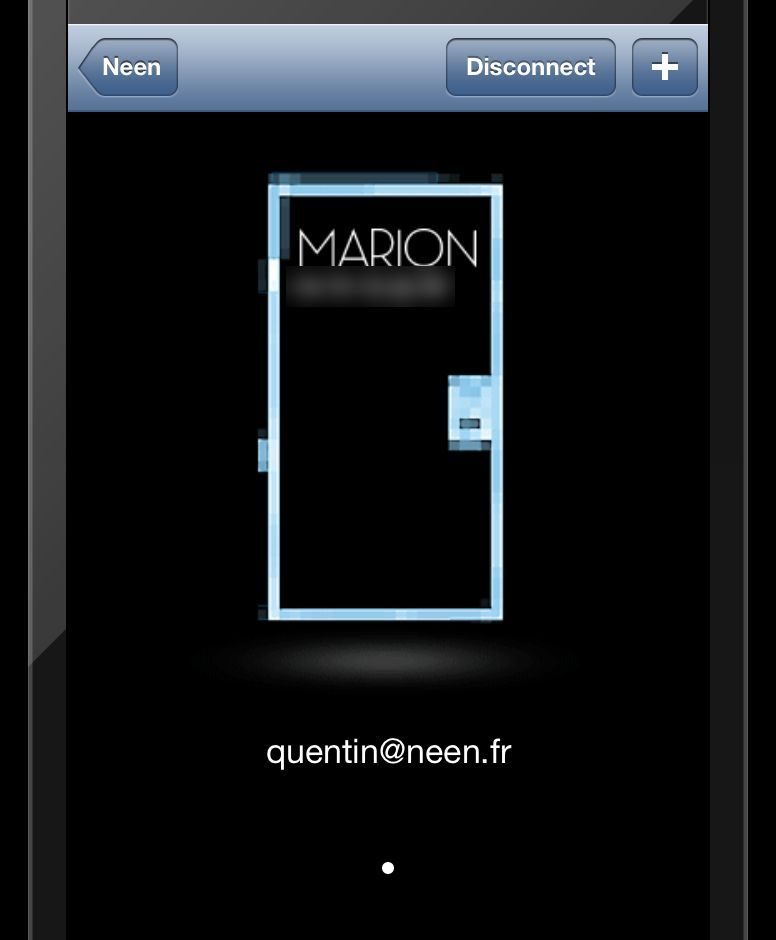
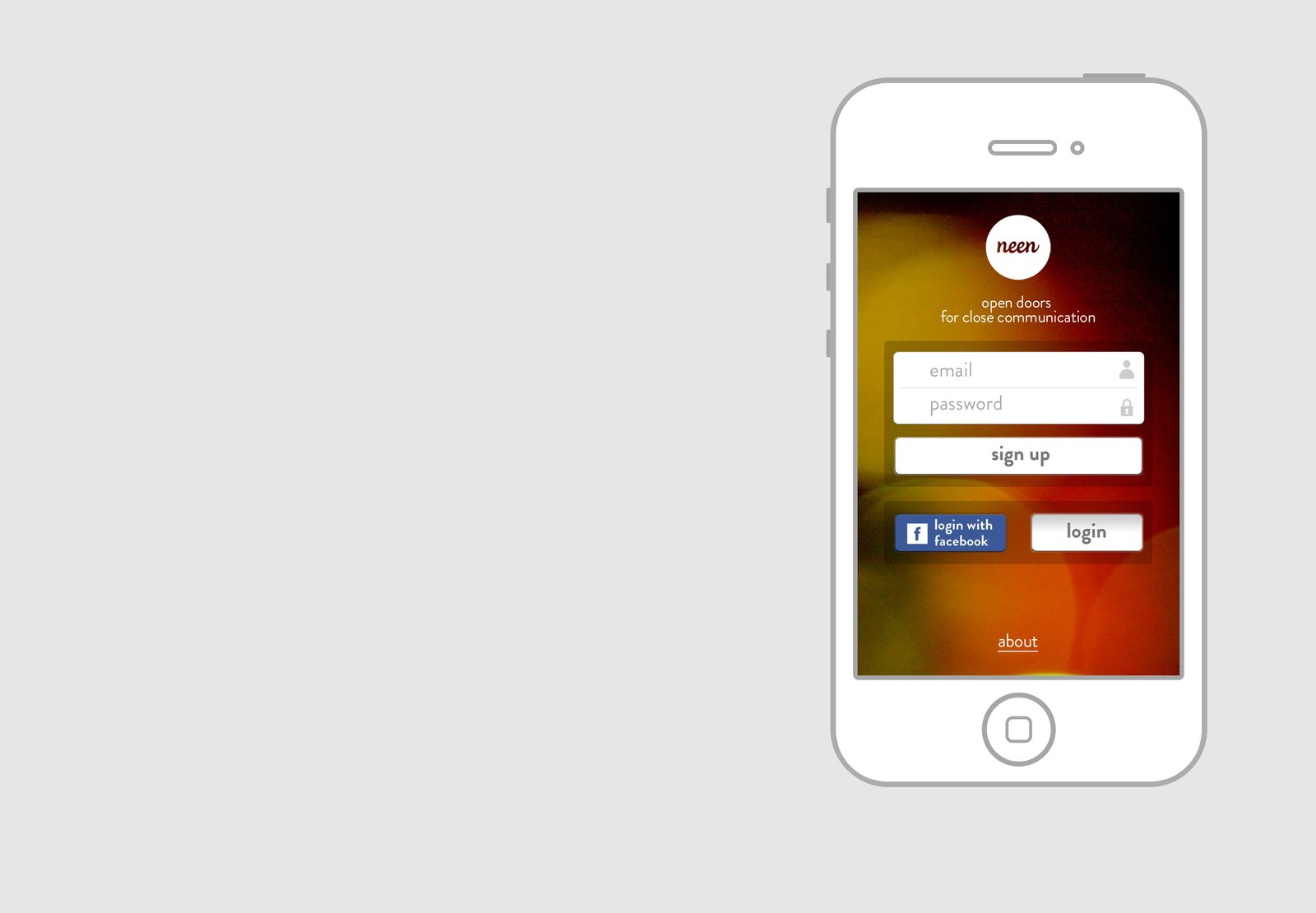
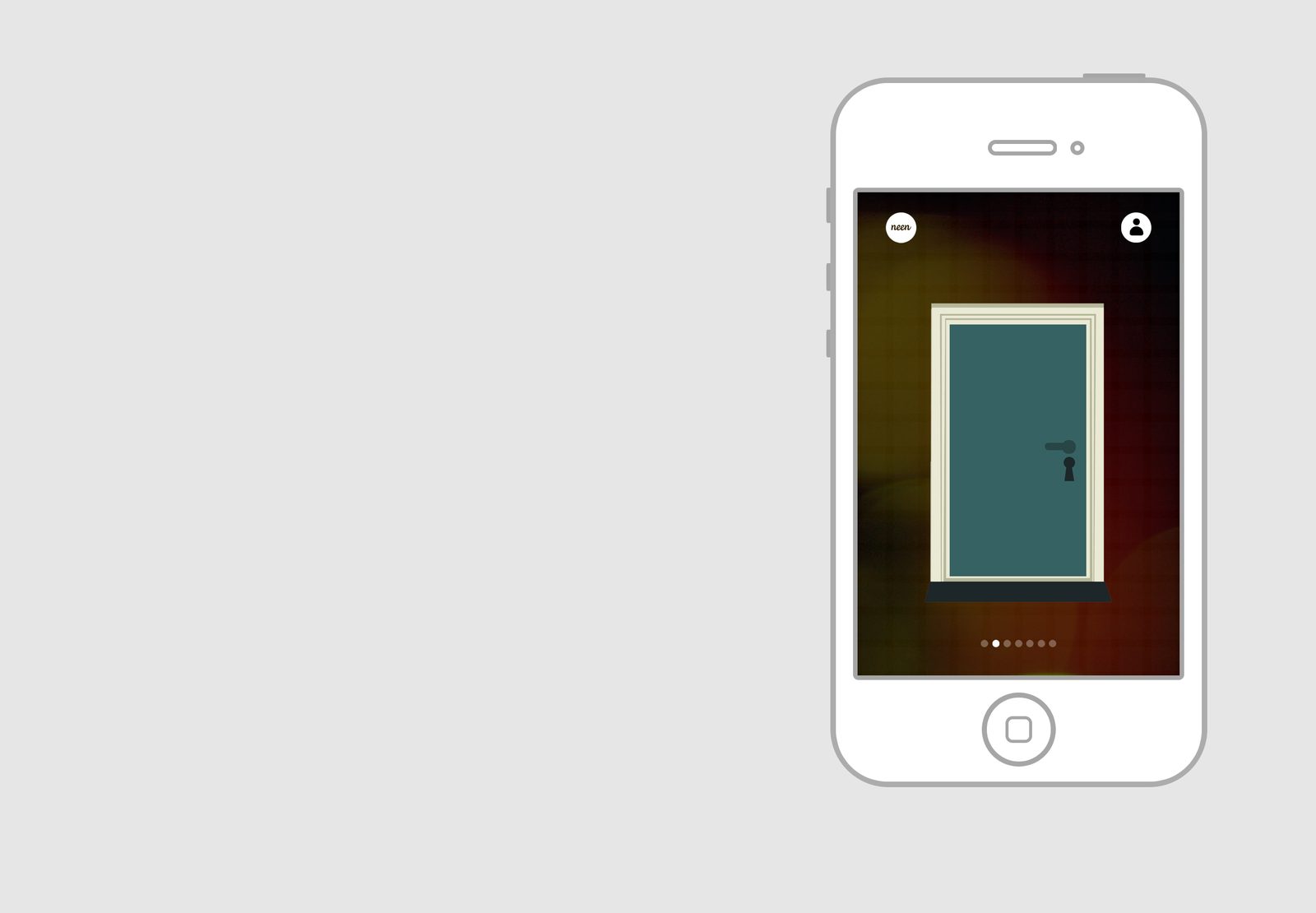
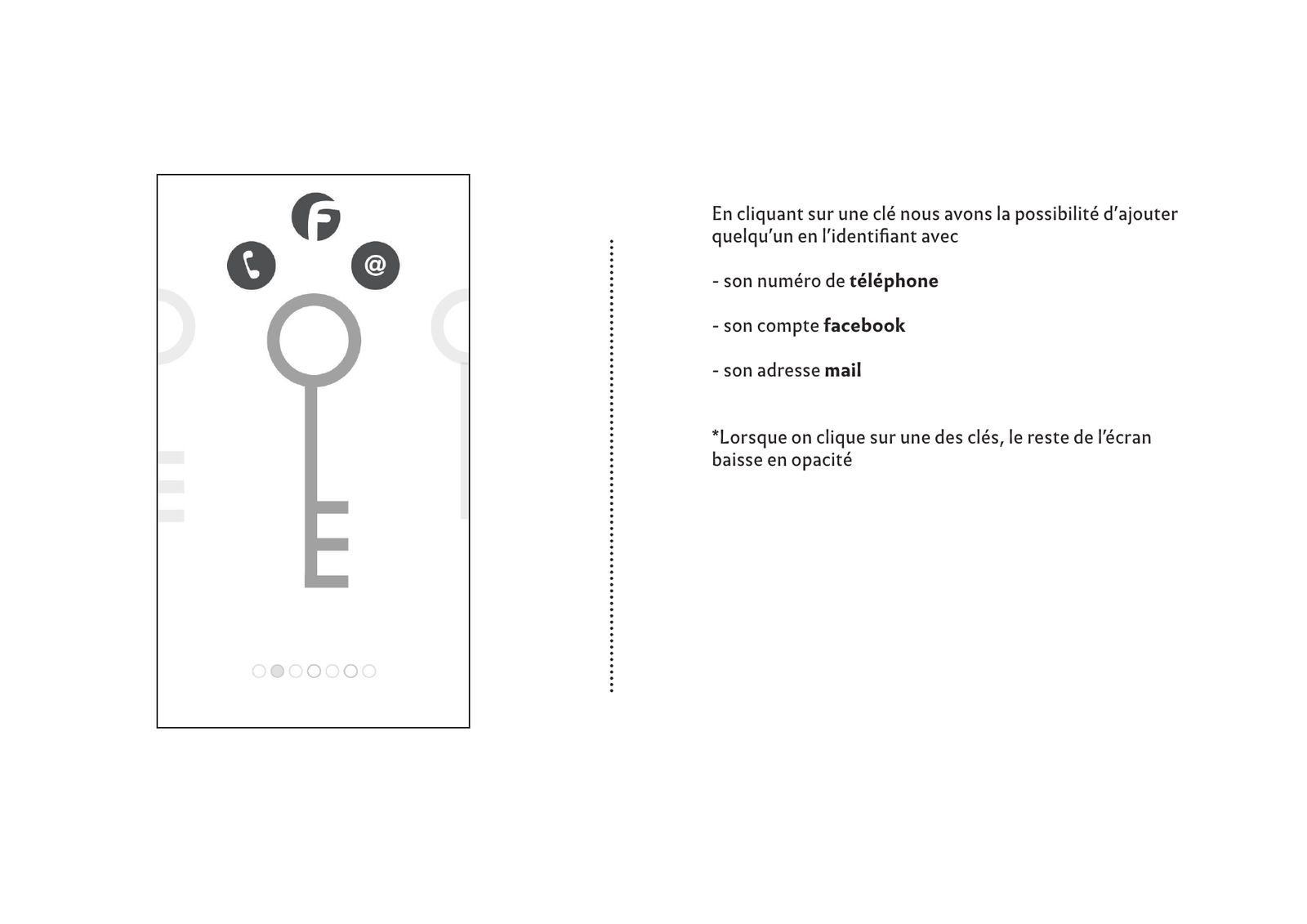
Designer Thétis Tsahakis redraws the app. The keys you give to your close ones turn into doors.
Archive · 2009-2016
Pictures from the project
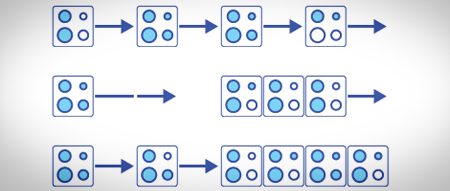
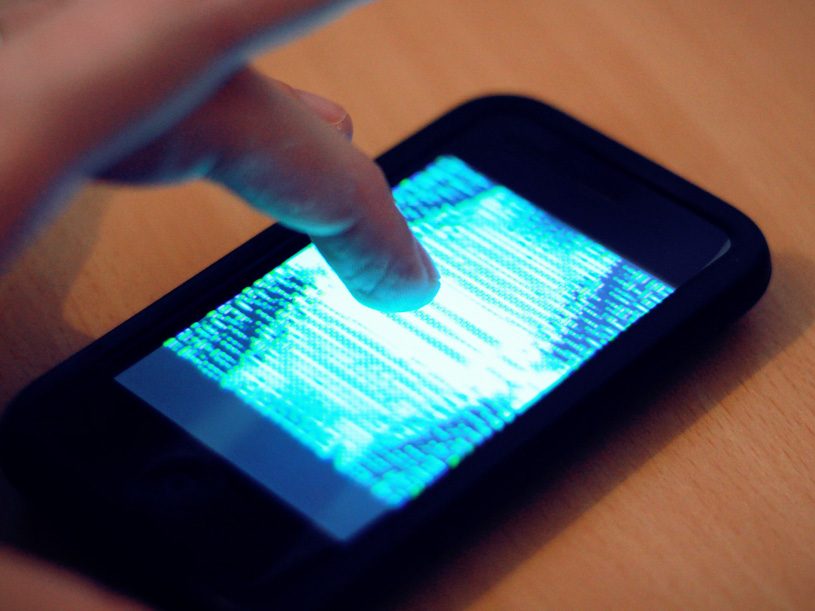
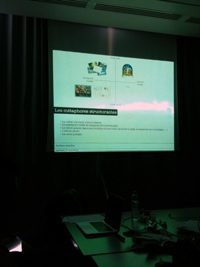
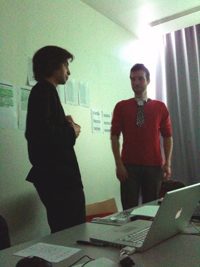
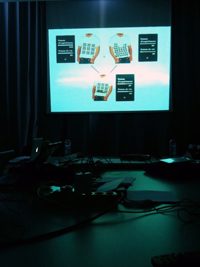
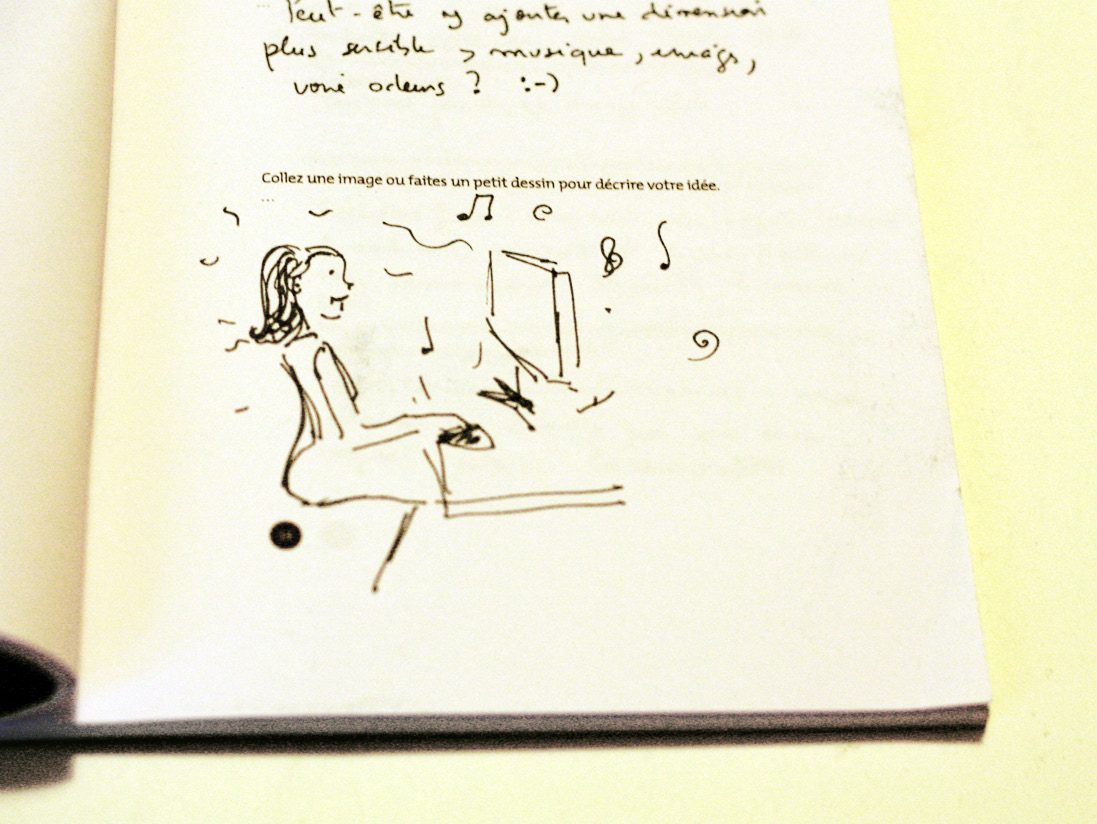
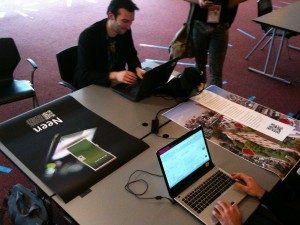
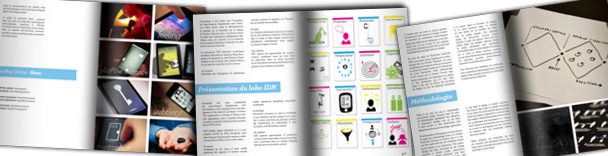
Photos of the lab and of the people I met, the prototypes, the boards and the app mock-ups. Everything I found in my archives, from 2009 to 2016.
Today
What Neen taught me
This research changed the way I see interactive and digital design. It also set me apart as a designer, because I worked with a living, sensitive material, made of gestures, habits, reticence and expectations between people.
There I discovered knowledge from other disciplines, ethnography, the anthropology of intimate communication, the sociology of the imaginary and cultural probes. I use it in every project, to observe before proposing and to let people tell their own practices.
Today I am preparing a PhD at the CEThicS lab of the Catholic University of Lille, on graphic camouflage against drones, with the same research tools.
With
The lab and the makers
- Rémy Bourganel
- Founder and co-director of IDN
- Étienne Mineur
- Co-director of IDN, designer
- Jean-François Depelsenaire
- Co-supervision of Neen
- Stefana Broadbent
- Anthropologist, ethnography
- Stéphane Hugon
- Sociologist, Eranos
- Nicolas Nova
- Researcher, Lift co-founder
- Marie de Quatrebarbes
- IDN researcher
- David Serrault
- IDN researcher, Hic & Nunc
- Kévin Boezennec
- IDN researcher, Soul Player
- Florent Deloison
- IDN researcher, first year
- Pascal Chirol
- Artist, first year
- Avétis Kazarian
- Web apps, 2011
- Jean-Baptiste Yunès
- First native prototype, 2011-2012
- Quentin Mathé
- iPhone app, 2012-2013
- Matthieu Bué
- neen.fr, 2014
- Thétis Tsahakis
- Mockups, 2016
Encounters
- Manuel Lima
- Visualisation workshop, 2010
- Carole Collet
- Textile workshop, 2010
- Dale Herigstad
- Talk at the Ensad, 2010
- Daniel Kaplan
- Fing, invitation to Lift France
- Giuseppe Attoma
- Designer, founder of Attoma
- Dominique Cardon
- Sociologist
- Stéphane Vial
- Design philosopher
- Xavier de La Porte
- Place de la Toile, France Culture, 2011
- Benoît Drouillat
- designers interactifs, 2011
- Nicolas Géraud
- Interview for the IDN blog, 2010
- Sébastien Lerique
- ENS, cognitive science, 2012
Archives
Traces
- The IDN programme on the lab’s blog
- Workshop with Manuel Lima
- Workshop with Carole Collet
- Lift10, interview with Nicolas Nova
- IDN at Lift 2011
- Neen, the film, on Vimeo
- The Neen page on the lab’s blog
- IDN becomes IDM
- Closing conference and debate
- Lift France 2011, Marseille
- The first neen.fr page
- My PhD, CEThicS